Simon Beaufils on the 16mm cinematography of Her Will Be Done
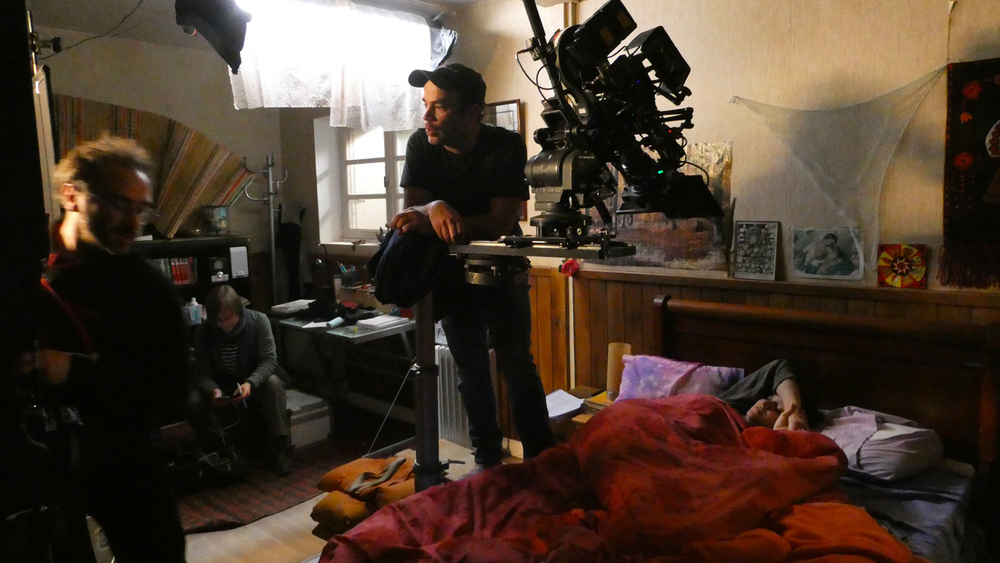
For the feature film Her Will be Done (Que ma volonté soit faite), cinematographer Simon Beaufils also served as co-writer alongside his longtime collaborator, director Julia Kowalski. In the following interview, Beaufils reflects on their writing process, the choice to film on Super 16mm with a package sourced from Panavision Paris, the need for unconventional lighting choices, and the commitment of a very small team embedded in a working dairy farm.
Panavision: How did you get involved in the project?
Simon Beaufils: I've been working with Julia Kowalski for a while now. I met her for a short film in 2012, then we continued working together on her first feature film, Crache-Coeur, a medium-length film, J'ai vu le visage du diable [I Saw the Face of the Devil], and now this film, Que ma volonté soit faite. We even wrote the screenplay together for this project, so you could say I was very involved!
In fact, the writing stage was very instructive. I found a lot of similarities with my work as a director of photography: Ultimately, it's about trying to understand and feel what's going on in the director's head, and then translating that into words for the screenplay, and then into images. And what was funny was forgetting, while we were writing, that I was going to be the director of photography, so I had to put aside the question of ‘how are we going to shoot this?’ and just follow Julia's wishes.
Writing was also an experience for me that was very different from filming. It's a long process: You explore different avenues, go back, take a step aside, and over time, everything becomes richer, evolves, matures. Then suddenly the production team approves a version, and everything speeds up! I admit that I wasn't unhappy to return to the temporality of filming, the moment when everything becomes concrete, the choices are final, and the film is finally taking shape! Anyway, I find that collaborating on the writing, like putting yourself in the shoes of an actor, alone in front of the camera, is a way of experimenting and understanding points of view and positions that are different from those of the director of photography and which are very enriching. 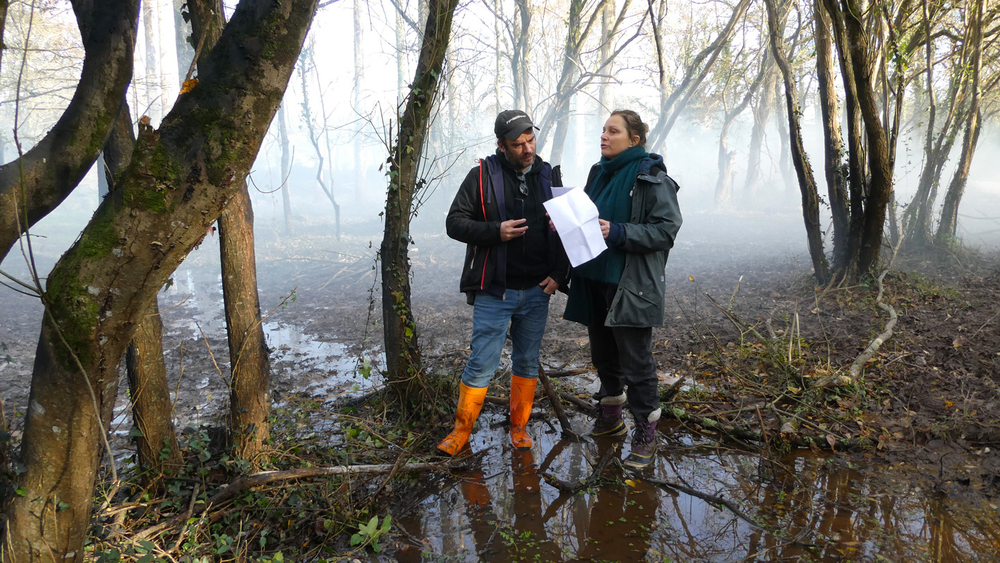
How would you describe the look of the film?
Super 16, very grainy, not very defined, large areas plunged into darkness, bold colors. The idea was to convey the mud, blood, flesh, sweat, all the oozing matter in the film. Something visceral, coming from the gut rather than the head. It's a film noir, about witchcraft and possession. And at the same time, it's almost a documentary about cows, about life on a farm, about being a young woman in this rural, brutal, macho and muddy world.
The image had to be bold but discreet, no flashy effects, just reality, concrete stuff. I used a lot of crazy color sources — sodium, mercury, unbalanced neon tubes. We didn't want to fall into the image of the idyllic, almost bucolic farm. A farm stinks, it's alive all day long, births, deaths, it's like a condensed version of emotions, of lives. We filmed on a working farm, so we had to work around all these real-life elements, such as milking time, the tanker truck coming to collect the milk, etc. The idea was to bring fiction into it, to integrate it.
Super 16 is perfect for this kind of situation. It's light, and there are no video screens or batteries in every sense. This allowed us to work as a very compact team, with a camera assistant, Marie-Sophie Daniel, a gaffer, Manon Corone, a key grip, Léo Stritt, and a free agent who moved from one position to another as needed, Colin Lefebvre. They were all great, totally committed to the film. It was fantastic to have them with me, and I felt very lucky that they wanted to be part of this film.
Being few in number forces you to make radical choices. There's no time for subtle differences or pretty counterpoints. We experimented with this team configuration on J'ai vu le visage du diable, and it creates a natural, unvarnished, direct image. 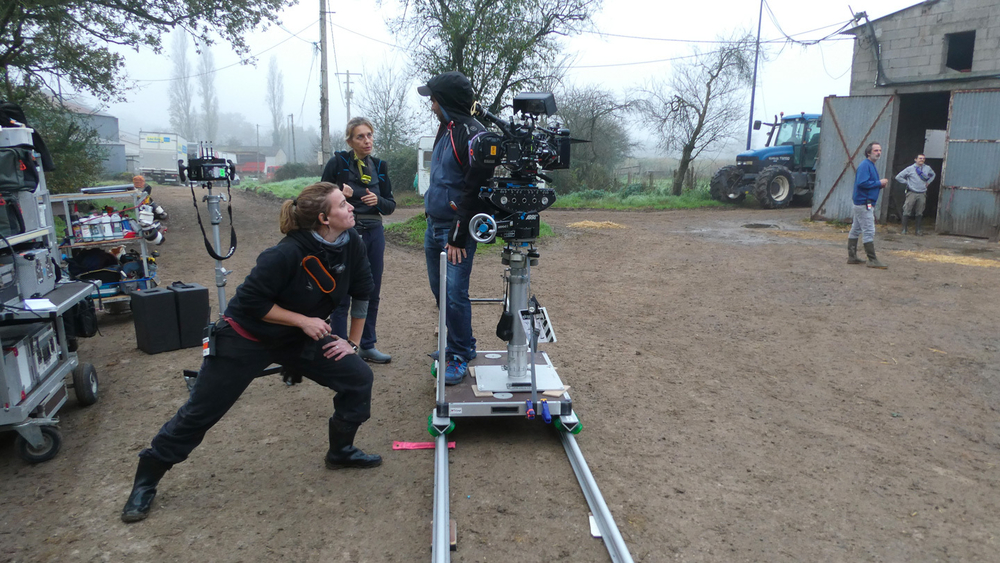
Were there any particular visual references that inspired you?
Ted Kotcheff's Wake in Fright, an Australian film with a sticky atmosphere, where people drink non-stop, it's hot, you can almost smell the bar, the flies sticking to the sweat — and then there's this hallucinatory, despicable kangaroo hunting scene that goes on for far too long and brings out the madness of the characters, or rather the madness of human beings in general. The film is suffocating, you're trapped with no way out, it's harsh. Visually too, there's no cuteness, it's raw, sometimes vulgar, intense in any case.
There's also Michael Cimino's The Deer Hunter. I think it's a landmark film for me. [Cinematographer] Vilmos Szigmond's work is incredible; I think it's one of the most accomplished New Hollywood films. An image, a shot, seemingly casual, it looks simple, it looks natural, and yet it is incredibly precise and subtle, always serving the characters, their relationships, the unspoken. The wedding scene is a model of its kind, everything that deeply animates the characters falls into place: love, friendship, jealousy, death. Not a word is spoken — or almost — it lasts half an hour, people drink, dance, laugh and cry. Everything is conveyed through furtive glances, swallowed frustrations, the beauty of a fleeting touch between two bodies, a ballet of human beings searching for each other, some finding each other, others soon to disappear in the Vietnam War. It is beautiful and tragic. And all of this is captured by a twirling but discreet camera, attentive, loving, friendly, intrusive. 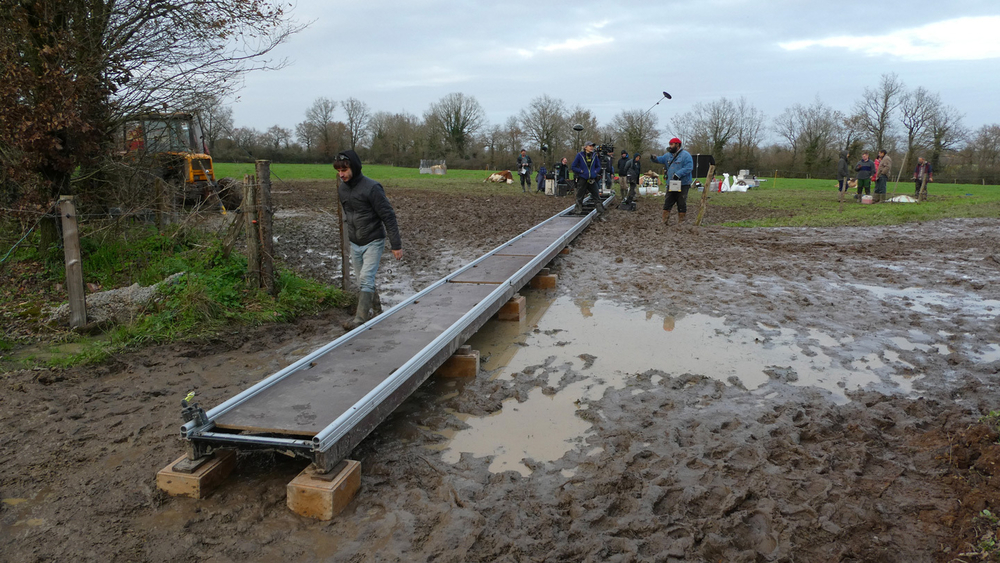
What brought you to Panavision for this project, and what attracted you to the specific lenses you chose?
First of all, I enjoy working with the Panavision team! They have been following my projects for a long time, and we can discuss things freely and easily, sharing opinions, both technical and artistic. Then there are a few lens series that I particularly like. For this film, I used Panavision Super Speeds, which I really like. I find that they blend very well with Super 16, with beautiful contrasts and color rendering while maintaining a softness on faces.
In a world where, in general, images are very precise and very defined — in cinema, but also and especially on phones, 8K TVs, etc. — I feel an increasing need to create images that offer a different way of seeing, less precise, less sharp, almost flickering. More shadows, hidden things, alterations, failures. Less clean, less sharp, more complex, more human and less AI, let's say! The mix of Kodak 500T grain and the Super Speed lenses allows for this, I find, a fragile image, eaten away by black, flare and blur. 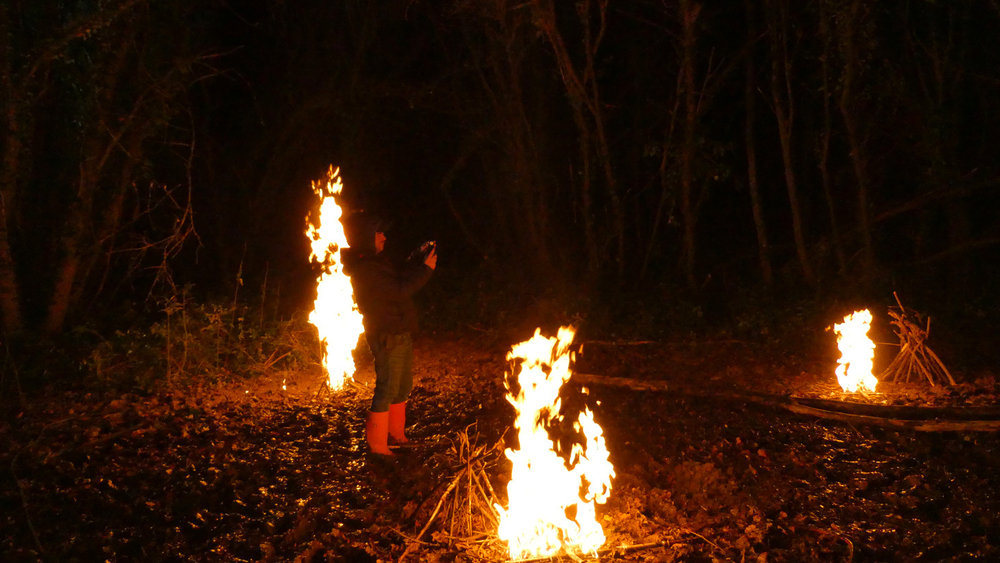
What made you want to become a director of photography, and what inspires you today?
I took part in a film shot in costume — and in Latin! — as an extra, at secondary school, in the early days of my second year studying cinema and audiovisual media. I knew nothing about cinema, let alone filmmaking. In one scene, I saw a crane cutting through the crowd, rising up and moving silently towards a goal that was unknown to me. The person pushing that crane had infinite class in my eyes, a combination of gentleness, synchronised movements and attention. It was beautiful! So I decided that I wanted to do that, to push a crane along shiny rails.
After this initial revelation, I was hooked. I had the opportunity to shoot a short film in 16mm that same year, editing it at night in the school on an old, almost abandoned Steenbeck, and little by little I realised what I really loved about film: shooting, the connection with the crew, interacting with the actors, the intimate relationship with the director, getting inside their head, understanding their crazy ideas!
With every film, I tell myself that it's a great opportunity to travel with a director, to discover new points of view, new ways of seeing things, new obsessions, etc. Everything is new every time! So what inspires me today is meeting people, discovering a discordant voice, a point of view on the world that I don't know, a universe that I don't understand. Trying to capture that on camera and show images that aren't too stereotypical, a little offbeat, as far removed as possible from what we see 24/7 on YouTube! Spaces of freedom are becoming rare in 2025, but I believe cinema will still be one of them. 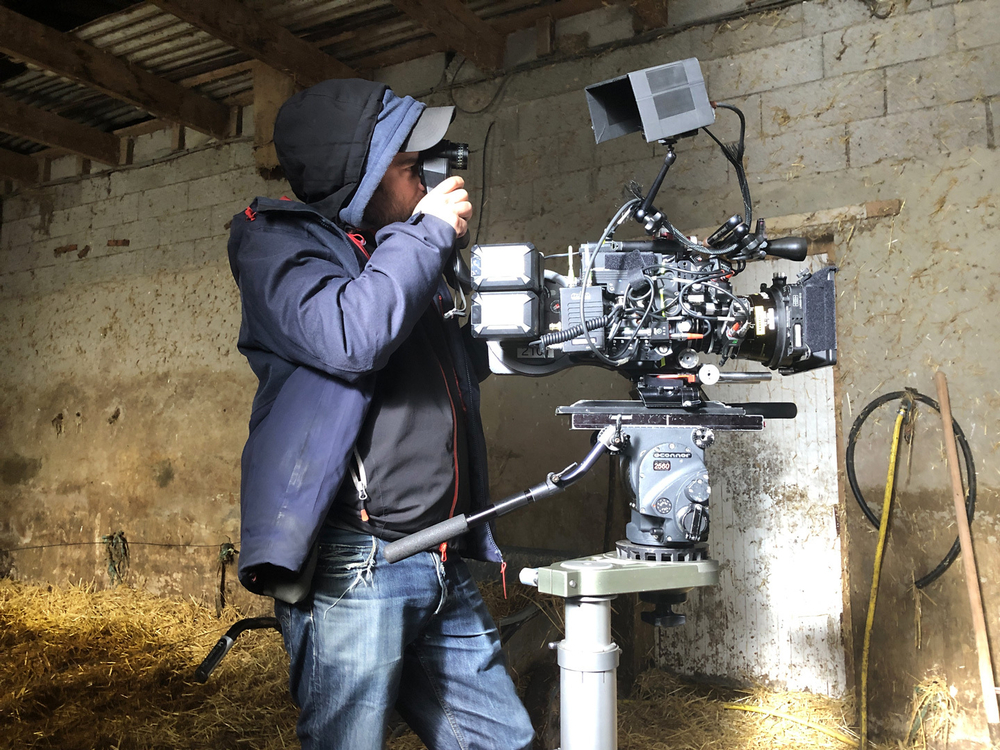
Bottom photo by Julia Kowalski. All other photos by Léo Stritt.
Related Products and Services
This is a carousel with manually-rotating slides. Use Next and Previous buttons to navigate.
