Peter Deming ASC: Horror, comedy & working with David Lynch
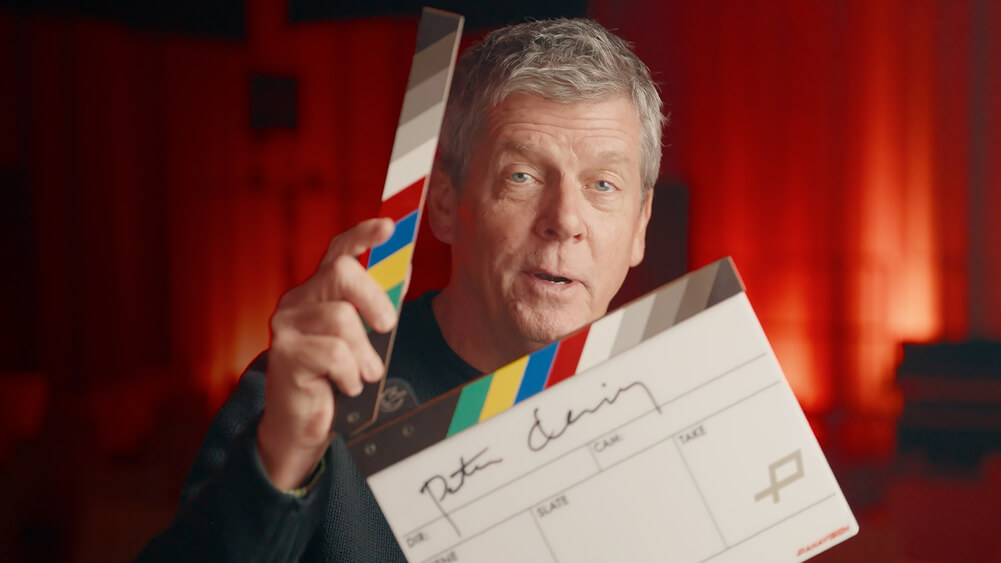
Renowned cinematographer Peter Deming ASC’s credits include memorable genre productions that run the gamut from horror films like director Sam Raimi’s Drag Me to Hell to comedies such as the Jay Roach-directed Austin Powers: International Man of Mystery. More recently, he photographed the genre-bending thriller The Menu, and his work will next be seen in the upcoming Netflix feature The Whisper Man. In this interview, Deming discusses how he started in the industry, offers insights into shooting horror and comedy, reflects on his long collaboration with David Lynch, and shares how he’s always searching to shoot something he hasn’t done before.
Career Beginnings
Deming didn’t start out dreaming to be a cinematographer. It was his passion for movies in general that gradually propelled him to do what he’s doing today. “I thought if I could do something for a living that didn’t feel like work, and I definitely enjoyed watching films, so I was a projectionist, I worked in a film lab, and then I eventually moved to Los Angeles and went to the American Film Institute for two years,” he explains.
Working in the camera department, he says, he got his start “as second AC, did probably half a dozen movies. I moved up to first [AC]. I didn’t have the first assistant gene at all. Then I started working as an operator. I think I went a year and my longest job was three days. But at the same time, I was shooting educational movies. The subject matter wasn’t very interesting, but I was learning about exposing and printing and getting that part of the job in my head.”
First Big Breaks
Deming’s commitment to learning the craft paid off as he began landing features as a cinematographer. “First big break — there were sort of two at the same time,” he recalls. “I started a film project that took two or three years to finish called Hollywood Shuffle [written and directed by Robert Townsend]. And then within those two or three years, I was called to work on Evil Dead 2 for Sam Raimi.
“Then you start getting more interesting opportunities,” Deming continues. “You’re introduced by other people you’ve worked with. I met Robert Townsend through a director I worked with at American Film Institute. Sam found me because I did a little low-budget indie movie in Michigan, where Sam’s from. The only thing I can figure out is he was interested in me for that. I’ve never asked him actually, I probably should.”
A few years later, following a string of horror and comedy films, Deming began what has proven to be an enduring collaboration with Panavision. “I remember I did a movie for New Line Cinema, Book of Love, it’s called. It was actually directed by the CEO of New Line, Bob Shaye,” he says. “Up until that time, I hadn’t used Panavision. We reached out and I met a gentleman by the name of David Dodson [now Panavision’s SVP of client relations and business development], who is still my friend today and still takes my calls.”
Collaborating With David Lynch
In 1992, Deming shot six episodes of Mark Frost and David Lynch’s short-lived television comedy On the Air, and a few years later, Lynch hired Deming to be the cinematographer on his 1997 feature Lost Highway. Their collaborations would also include the feature Mulholland Drive and the 2017 continuation of Lynch’s television series Twin Peaks.
Reflecting on what it was like working with the late filmmaker, Deming shares, “Most of working with David is on the day you’re shooting. You go there, you watch him rehearse with the actors. We sit down and make a shot list, which David is very specific about. And then we might talk about the mood of the scene or the lighting of the scene, but usually not. He would leave, we would interpret it via lighting, and then he would come back and hopefully say, ‘Okay, let’s shoot.’
“With David, it was, I wouldn’t say improvisational, but it was sort of intuitive,” Deming adds. “The more we worked together, the less we had to talk about it, which was kind of great.”
Horror Cinematography
Beyond his work with Lynch, which stands in a genre unto itself, Deming has been behind the camera for a remarkable variety of horror films, including Raimi’s Drag Me to Hell, Drew Goddard’s The Cabin in the Woods, and parts 2, 3 and 4 of the Scream franchise. “On a horror film, there’s other considerations,” he says. “There’s usually stunts, there’s definitely makeup effects that have to be worked into the schedule. There’s a little more planning, and those things affect what order you shoot a scene.
“It’s a genre that has tropes, and you’re sort of working off those tropes,” Deming continues. “And to me, a lot of horror is putting the audience in the character. When you’re designing a scare scene, you have to talk with the director about how they see it. If it’s a horror film with a monster, how much you want to show, maybe some destruction or some claw marks that leaves more to the imagination of the viewer.”
Filming Comedies
Never one to be typecast, Deming’s experience also extends to the other end of the genre spectrum, where his duties aren’t to help get screams, but to get laughs. He finds comedy looser than horror. “It’s definitely scripted, but in comedy, you have a lot more comedic improvisation,” he explains. “You’ll sort of do a few takes with the dialogue that’s there, and then typically the cast, they have ideas and they work off each other. And so you’ll do maybe half a dozen more takes of them just trying things, trying to come up with something funnier or different.
“The process is once you get into a setup, if it’s dialogue comedy, you’ll do a lot of takes,” he adds. “If it’s physical comedy, you sort of assess that pretty quickly. Something like Austin Powers, it’s genre comedy. You’re creating a genre of a movie that you’re poking fun at, at the same time.”
Forever Learning
Deming appreciates the fact that cinematography always offers him new challenges to stretch his skills. “One of the surprising things about doing this for a long time is that you never stop learning,” he says. “Then I think you learn it when it’s appropriate. You think there’ll come a time when I know everything, and that’s never going to happen because particularly now with technology changing, you’re always studying and learning and talking to people about what they’re doing.”
Deming’s years in the industry haven’t dulled his edge or passion for filmmaking. “What keeps me motivated is every project is different,” Deming says. “I’m always interested in looking for projects that exist in worlds that I haven’t portrayed yet. Creating a new visual world for me, you sort of get a fresh approach. I think that’s what keeps me interested, for sure.”