Natasha Braier ASC ADF on the DEEP-LIGHT cinematography community
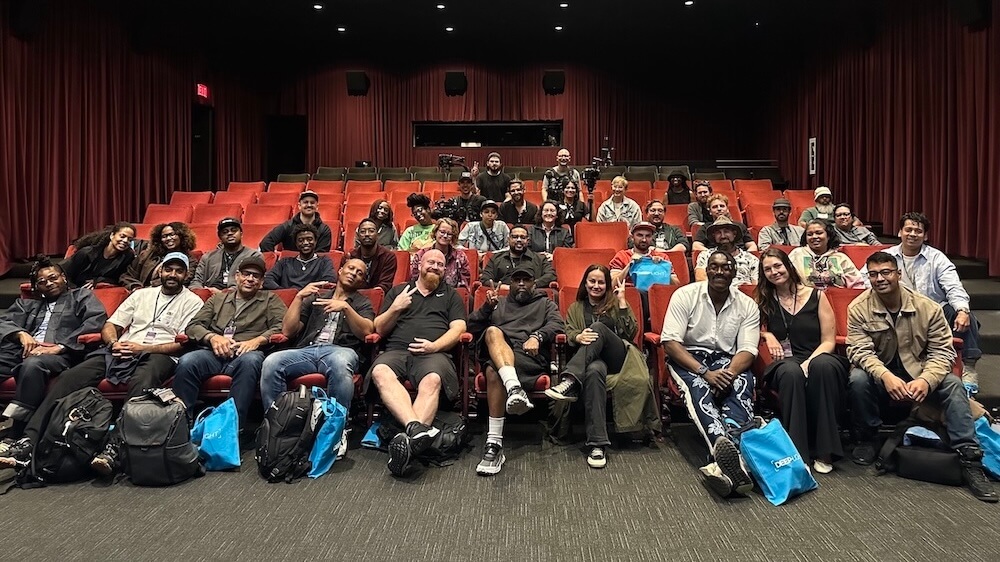
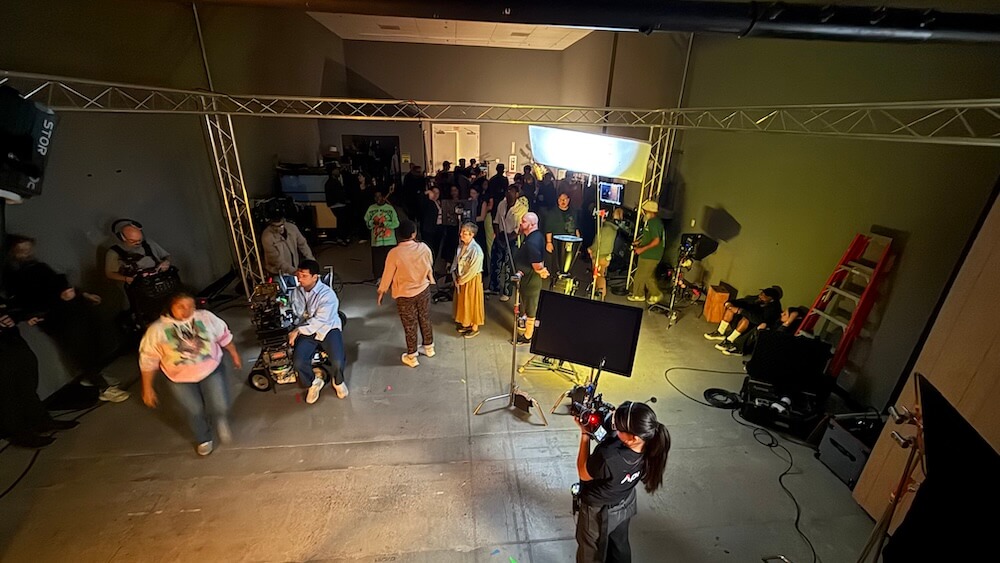
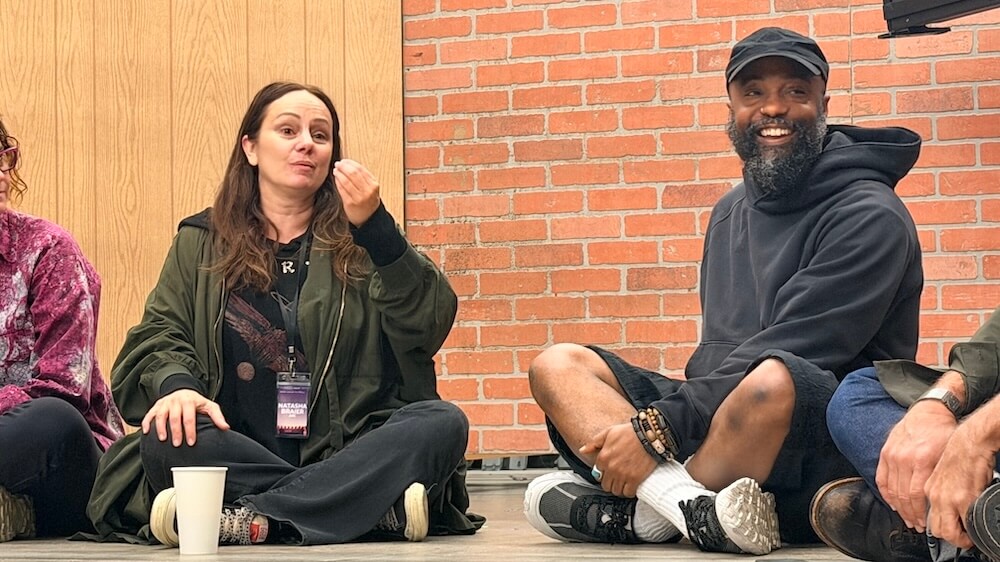
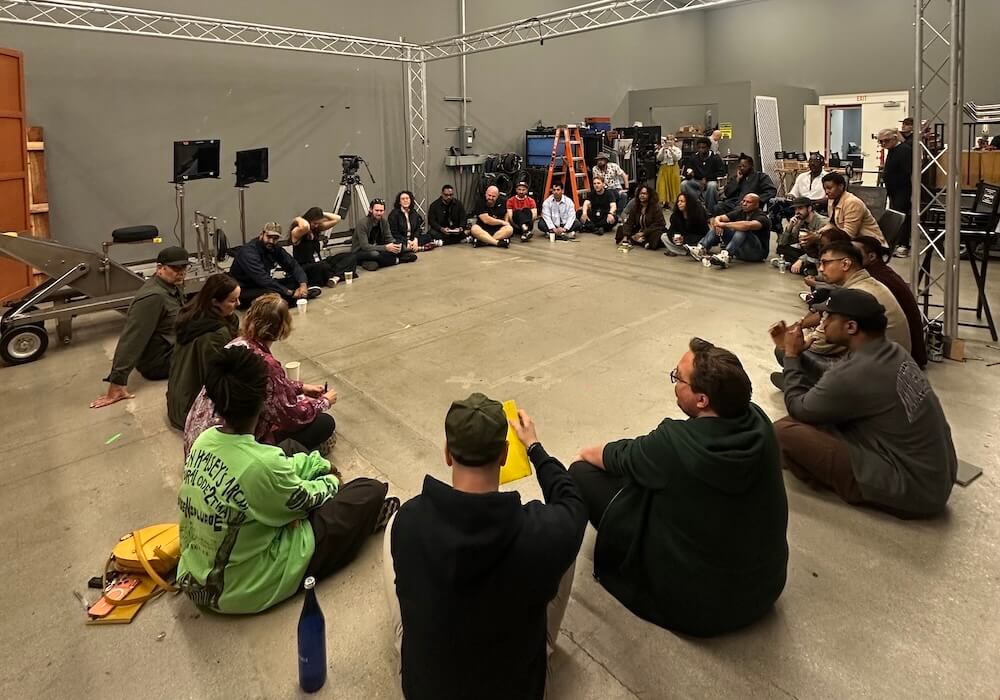
DEEP-LIGHT, the mentorship lab, online platform and collaborative community for cinematographers launched by Natasha Braier ASC ADF, recently hosted an immersive two-day workshop with Oscar-nominated cinematographer Bradford Young ASC at Panavision’s Woodland Hills headquarters. The workshop focused on developing attendees’ personal visual language and how to trust one’s individual voice while under the stresses and demands of prep and production. Young coached participants through hands-on exercises and reflected on his own artistic journey as a filmmaker.
In advance of the workshop, Braier and Young sat down in Panavision’s Tak Miyagishima Theater for a recorded conversation that will be available on DEEP-LIGHT’s website later this year. Over the course of the conversation, Young reflected on his time as a film student at Howard University, where he discovered greater representation in independent and foreign films and became determined to change how people of color were represented on-screen and in the film industry at large. He also emphasized the importance of legacy and creating from a place of connection to one’s roots, keeping in mind and honoring mentors, family and ancestors. Young shared that he sees organizations like DEEP-LIGHT as essential tools of change in the hands of a community of passionate individuals.
During the workshop, Young guided participants through a number of camera and lighting exercises, encouraging discussion, pointing out different personality types, and counseling how to anticipate the needs of others, regardless of their position on set. He also spoke about his belief that collaboration, rather than hierarchy, makes for the most productive sets, and he stressed the importance of establishing boundaries both to avoid stepping on collaborators’ toes and to maintain a healthy work-life balance.
Afterward, Panavision caught up with Braier for further insights into DEEP-LIGHT’s origin and what the future holds for the community.
Panavision: What inspired you to launch DEEP-LIGHT?
Natasha Braier ASC ADF: DEEP-LIGHT came from a gap I kept seeing over and over again. There’s a lot of focus on gear and technique in our industry, but little space to talk honestly about how you actually navigate the job, how you build a voice, how you collaborate with directors, how you handle pressure, politics and responsibility on set.
After more than 20 years working as a cinematographer, and teaching at the ASC, I realized those were the conversations people were hungry for. DEEP-LIGHT is a way to create a space where that knowledge can be shared directly, honestly and without filters. I didn’t have much support with that when I was coming up. They didn’t teach me any of this in film school, and I truly believe it would have made a big difference in my life. So with DEEP-LIGHT, I tried to create something that I knew my young self needed — well, I still need it! And definitely a lot of other people need it too!
Who makes up the DEEP-LIGHT community?
Braier: DEEP-LIGHT is a global community of cinematographers across all levels, but what’s interesting is that many of them are already working. They’re not beginners. They’re people a few years into their careers, or even quite established, who are looking to step into bigger projects, refine their voice, keep learning, and find a community of peers to support each other. We have members from all five [inhabited] continents, and that diversity of perspectives is a big part of what makes the conversations so rich.
Where did people come from to participate in the workshop you presented with Bradford Young?
Braier: We had people coming from all over: Australia, Spain, Romania, London, Colombia, across the U.S. and beyond. That international mix is very much part of what DEEP-LIGHT is. It’s not centered in one industry or one system. It’s a global conversation about cinematography.
How do workshops like this build toward your vision for the DEEP-LIGHT community?
Braier: Everything we do at DEEP-LIGHT is about creating meaningful, real exchanges, not passive learning. The workshops are designed as a point of entry into a longer relationship with our community. People come for an intensive experience, but they get a lot more beyond that: a continued conversation, ongoing support, and a communal place where they can return to when they’re facing real challenges in their work. The continuity is a big part of our vision.
What brought you to Panavision for this workshop?
Braier: Panavision has always been a place that understands cinematographers, not just technically, but creatively. For this kind of work, where the focus is on process and authorship, it’s important to be in an environment that supports that level of thinking. Panavision isn’t just a facility, it’s a place where a lot of the craft and history of cinematography lives, and that makes it a natural home for this kind of workshop.
As a cinematographer, when did you first work with Panavision, and how has that collaboration evolved over the years?
Braier: My relationship with Panavision goes back to my film school years in London, and it’s continued throughout my career. When I arrived in Los Angeles, they were the first place I went to and the first place that really supported me, especially on smaller independent projects. Over time, that relationship has grown into something much deeper: creative collaboration, experimentation, developing tools together. It’s become a long-term partnership that has evolved alongside my work.
Since its launch, what impact have you seen from DEEP-LIGHT’s efforts?
Braier: The most immediate impact has been how quickly the community has grown, but more importantly, the level of engagement. I think it shows how we needed something like DEEP-LIGHT that was for all of us. People are opening up about real challenges, sharing experiences, and supporting each other in a way that doesn’t usually happen in more traditional settings. We’re also seeing people step into new opportunities, build strong collaborations and friendships, and approach their work with more clarity and confidence.
Looking to the future, what are your hopes for DEEP-LIGHT and the community you’re nurturing?
Braier: The goal is to keep building something that feels real and useful, not just another platform. We want the members to be involved in helping us build it, so it can grow bigger and offer more resources for everyone. I want DEEP-LIGHT to continue connecting cinematographers across the world, creating access to meaningful conversations and supporting people as they grow into their voice and their careers. I want to empower people to do what they love, to do it with the awareness that telling stories comes with a huge responsibility. I want to create an army of storytellers that help humanity through the projects they choose to invest their energy on. I want to give those artists as many tools as possible to navigate their journey. As we grow, I also want to stay very intentional, and keep the community curated, keeping it human, and making sure it doesn’t lose what made it valuable in the first place.
Learn more about the DEEP-LIGHT community at deep-light.com, where you can watch recorded events and conversations, find crew across the world, and sign up for mentorships and workshops. General access is free, while other programs require a fee.