Making movies in preproduction: John Schwartzman ASC in conversation
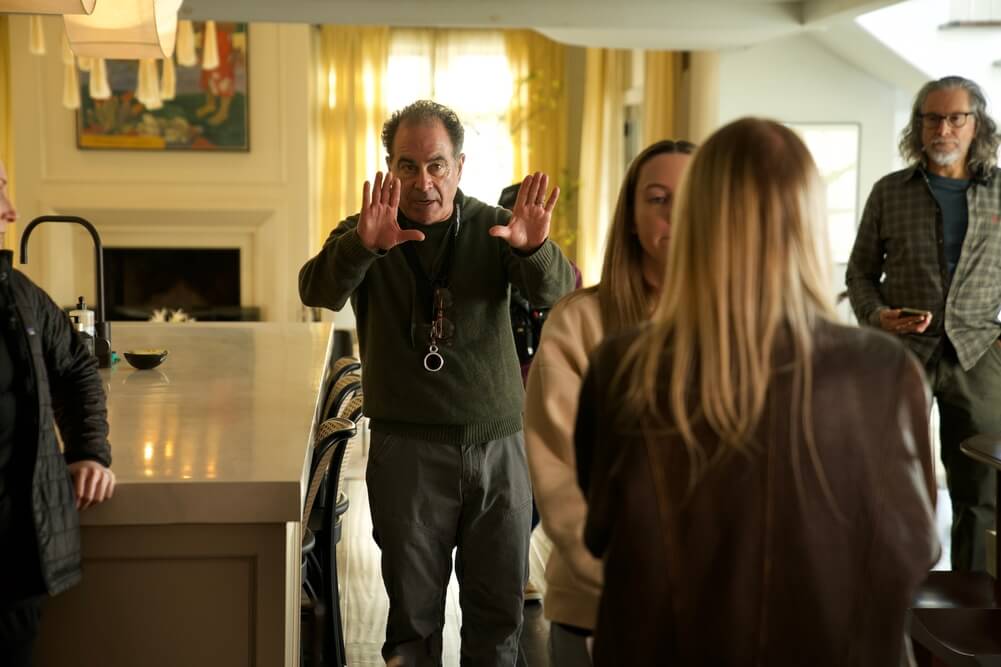
Cinematographer John Schwartzman ASC has photographed projects across every budget and genre, from tentpole studio fare like Armageddon and Jurassic World: Dominion to character-driven dramas like The Founder and Saving Mr. Banks. Most recently, he reteamed with director Paul Feig for their sixth feature collaboration, the dark comic thriller The Housemaid, starring Sydney Sweeney and Amanda Seyfried and based on the bestselling novel by Freida McFadden.
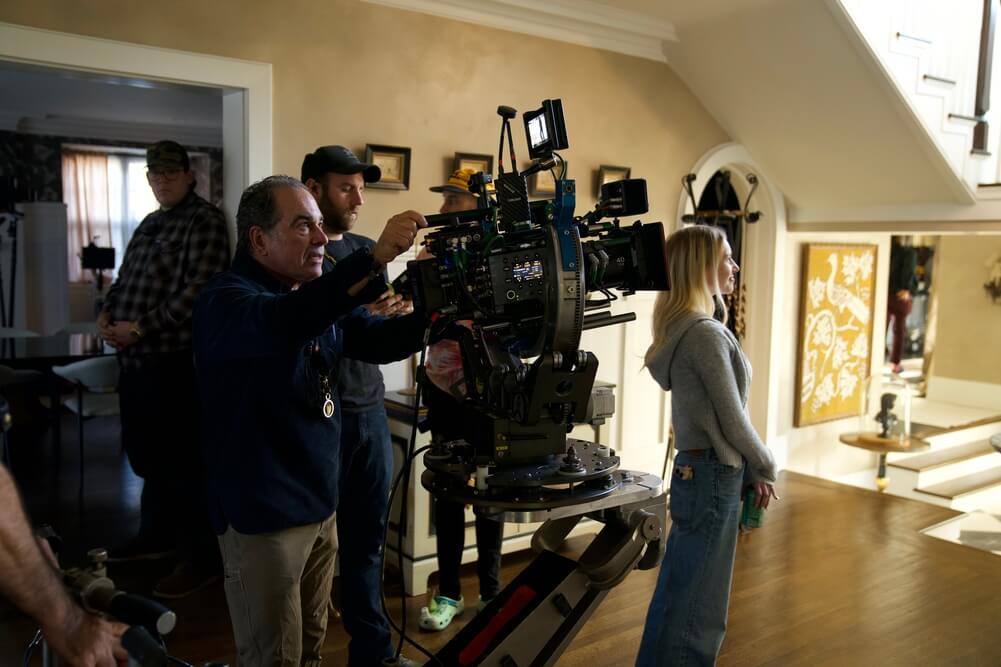
Throughout his career as a director of photography, Schwartzman has called Panavision his home, and for The Housemaid, he worked with the team at Panavision New York to secure a package that included Panaspeed lenses and Venice 2 cameras. In this interview, he discusses the making of The Housemaid, how it connects to his larger body of work, and his close relationship with Panavision.
Panavision: When did director Paul Feig first mention The Housemaid to you?
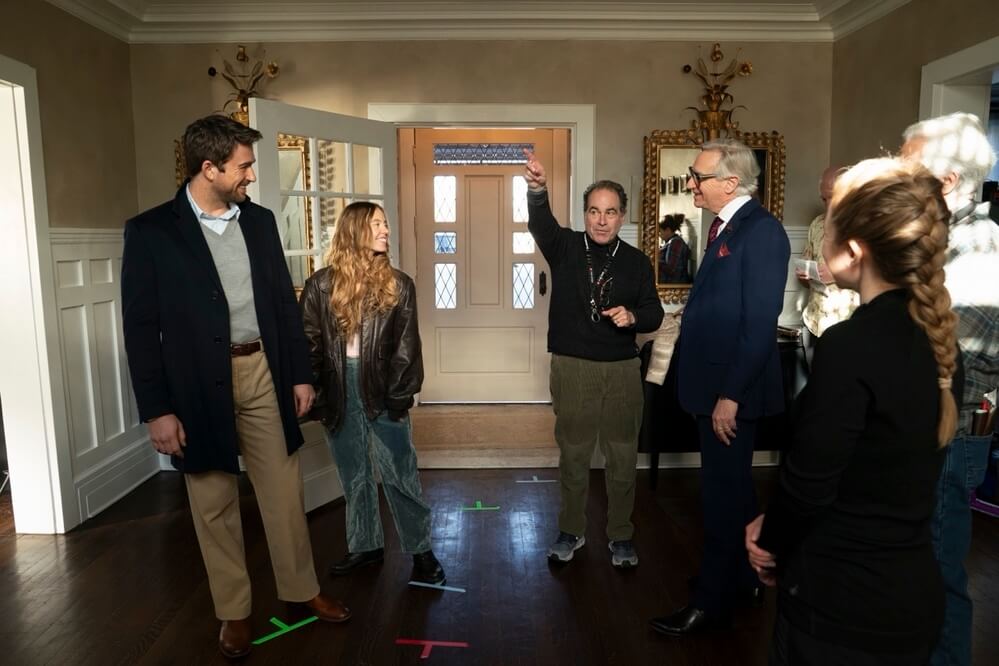
John Schwartzman ASC: Let me give you a little bit of history. Paul and I were partners at USC film school in 1982, so we’ve had a very long relationship for now, what is it, 44 years? I work a lot with Paul, and I’m always in contact with him. I was doing a streaming show for another director by the name of John Lee Hancock whom I work with almost as much Paul, when Paul called me in Manchester and said, ‘I’ve got this movie, The Housemaid. It’s coming together very fast. Can you do it?’ We looked at the dates, and it was tight, but I was able to do it. That’s how it came about. With Paul, sometimes you get three days’ notice and you’re on a plane. Fortunately, I was available.
Then I read the book, which is a real page turner, a big bestseller. We talked about what the style of The Housemaid was going to be, and Paul said, ‘It’s a Nancy Meyers movie going bad.’ My wife used to work for Nancy Meyers in the set dec department, so I knew exactly what he was talking about! I could see in my mind’s eye immediately what he was going for, and given the nature of the story, it made perfect sense.
Nancy Meyers is known for the polished interior design of the homes seen in her films. How did you and Paul translate that style into your visual language for The Housemaid?
Schwartzman: This goes back to the first film I shot for Paul, A Simple Favor. Although Paul and I had been partners at USC film school, we were on different trajectories until that film. I was always doing these very long, big budget movies and was never available for Paul. Then I became available to do A Simple Favor, which was this weird black-comedy thriller in an urban setting. I asked Paul, ‘What are we trying to do here?’ He said, ‘It’s urban noir.’ I said, ‘What is that?’ He said, ‘I don’t know, but you’re going to figure it out.’
What I would say is that The Housemaid is another evolution of this idea of urban noir. It’s not super dark and not classic noir with the tropes of light coming through Venetian blinds, yet it still maintains the same kind of camera moves and things that noir had.
What were the challenges of shooting The Housemaid?
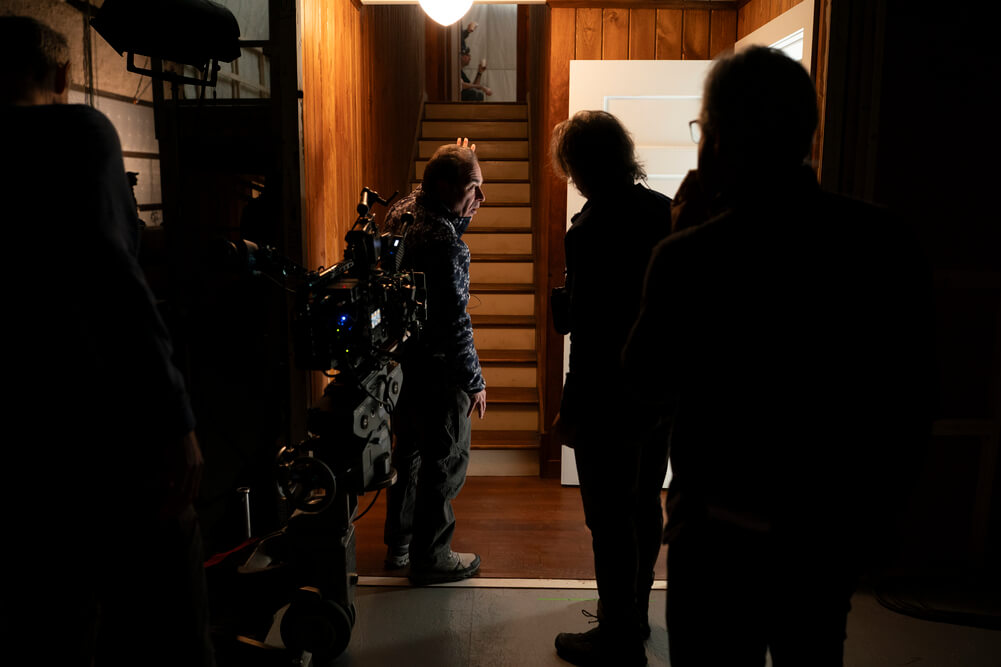
Schwartzman: What I think will put it in perspective for other filmmakers is that we did this movie in 30 days, and we only worked eight hours a day. Paul works so hard that he wants to shoot an eight-hour continuous day and then go home, and everybody gets to have dinner with their families. It’s a fabulous way to work, but you look at it and you realize we’re giving up 33 percent of our hours.
When I first read the script, I said, ‘This is a 45-day movie,’ but because of the budget and Sydney Sweeney’s contractual obligations, we only had 29 days to make the movie. We took an extra half day because we had a weather day, and we only had Syd for 19 of those days. We really had to be buttoned up.
Shooting a studio picture on that tight of a schedule means you must have put together a solid plan to follow.
Schwartzman: Movies are made in prep. It doesn’t mean that things don’t change on the day, but you have to go in with an idea. I go in well prepared, and by being well-prepared, you can change your plan. God knows, we did that a lot, but I was prepared for the changes because I had done my homework. I’m very good at preparing a movie. I can see every problem way before anybody else does.
I can’t remember if it was Charlie Mingus or Charlie Parker, one of the great jazz musicians, when somebody asked him about improvising, he said, ‘You practice your scales, you practice your scales, you practice your scales, and then you forget them.’ That’s kind of what prep is on a movie. It’s about looking at the location or whatever the situation is and figuring out what you want to do in the best possible situation. But you have to understand, as cinematographers, that we rarely get the best situation. You’re hoping for a cloudy day, and you get a sunny day. You’re hoping for a sunny day, and you get a cloudy day. There was a period of 10 years where I didn’t do a movie under $250 million. Even on those movies, you couldn’t show up and say, ‘Well, the light’s not right. We’re not going to shoot today.’ That doesn’t happen. That is not how movies are made. Movies are a business, and you’ve got to get the work done, so the better you can prepare yourself for all the inevitabilities that you’re going to face, the better the outcome’s going to be.
Prepping for a film is a learned skill. How did you learn it?
Schwartzman: Survival. You learn it as you get better and get more experienced. When you go outside, you’re exposed to the weather, and most of the time, the weather is not in your favor, especially in the movie business today where we don’t shoot in Los Angeles! In Los Angeles, you know there’s going to be 335 days of sunny weather. You don’t know what it’s going to be like in New Jersey, New Orleans, Atlanta or Hawaii. They’re more challenging places to shoot movies. There’s a reason why the film business really was based in Los Angeles, and that was partially because of how consistent the weather is.
I think for young cinematographers, because we don’t shoot as much in Los Angeles, when they’re on exterior locations, it’s become way more challenging. So when I look at the work of other DPs, I always marvel at how well they’ve dealt with the environments.
What brings you back to Panavision for a project like The Housemaid?
Schwartzman: I’ve never done a movie anywhere but Panavision. When I came out of film school in 1985, I won the award that is essentially the Student Academy Award for Cinematography. I was getting ready to start doing some low budget independent movies, and Bob Harvey, who was a legend at Panavision and is now retired, reached out to me and said, ‘Look, we’d like you to be part of our family.’ Forty years later, I’ve done 70-odd projects, they’ve all been with Panavision.
I remember when [Panavision Senior Vice President of Optical Engineering and Lens Strategy] Dan Sasaki worked for his father, Ralph. That’s how far back I go, and the beauty of it is that I’ve had this relationship with this company for so long. People like Dan Sasaki, Larry Hazelwood, Amanda Sasaki — these are people that I have relationships with, whom I rely on, who’ve been there for me and have taken care of me and given me all the tools that I need to do my job. Since I’ve been working for most of my career with the same crew people, the idea of family resonates very deeply with me. Panavision has been my family since 1986.
What makes Panavision unique in your mind?
Schwartzman: The reality is there are lots of places you can go and get equipment, but what you can’t get everywhere else is the kind of service and relationship that I have with the lens department at Panavision. Digital cameras are ubiquitous, and what’s become more important now than maybe even back in the film days is the nature of lenses. Do you want them sharp? Do you want them soft? Do you want aberrations? Do you want the edges to fall off? And Dan [Sasaki] is the best person in the world at this. I’m not that technical. When he and I talk, I don’t even understand half of what he’s saying. I’m just like, ‘Okay, so give me three versions of what you’re talking about, let me look at it, and I’ll tell you which one I like.’ I don’t know how many places who rent gear can do that to the degree and with the finesse that Panavision does. Why would I ever go anywhere else?
Related Products and Services
This is a carousel with manually-rotating slides. Use Next and Previous buttons to navigate.
