Frida Marzouk AFC: The cinematography of Promised Sky
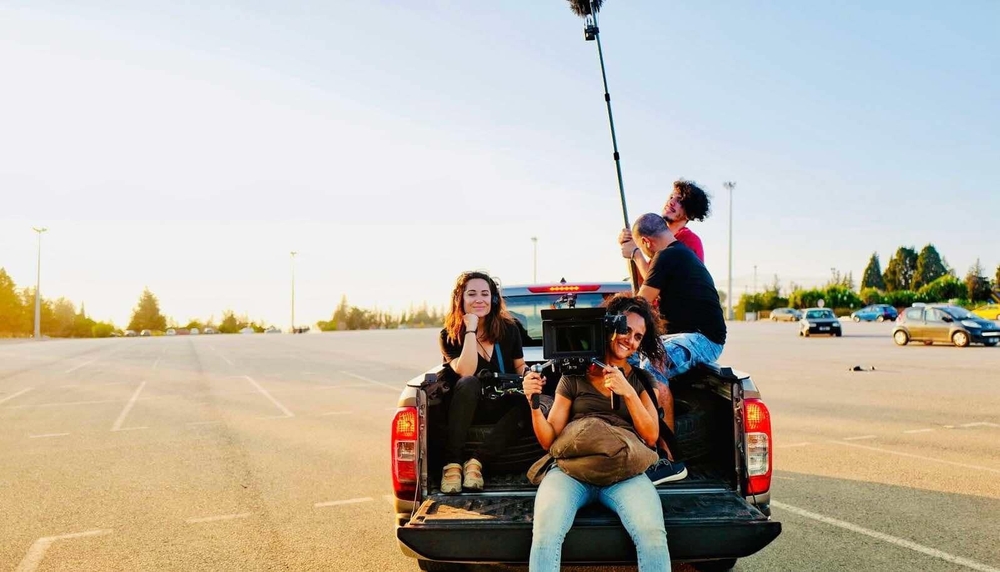
An official selection at the 2025 Cannes Film Festival, director Erige Sehiri’s feature Promised Sky [Promis le ciel] follows three women in Tunis who provide harbor for a shipwreck survivor, forming an unlikely family. The production reunited the director with cinematographer Frida Marzouk AFC following their previous collaboration on Under the Fig Trees [Sous les figues]. For Promised Sky, the cinematographer worked with Panavision Paris to put together an equipment package that included Alexa Mini LF cameras and Panaspeed large-format spherical primes. In this interview, she shines a light on her collaboration with the director and the aesthetic and technical choices that guided the movie’s visual design.
Panavision: How did you become involved in Promised Sky?
Frida Marzouk AFC: This project was born out of an encounter. I met the director a year or two before filming, thanks to Ghalia Lacroix, a screenwriter, editor and friend we had in common. At the time, a bond was formed, even though the film had not yet been defined. Then, just as the Covid pandemic was beginning to emerge, the director contacted me to see if I was available to go to Tunis to shoot, and we shot Sous les figues [Under the Fig Trees], the director’s first feature film. 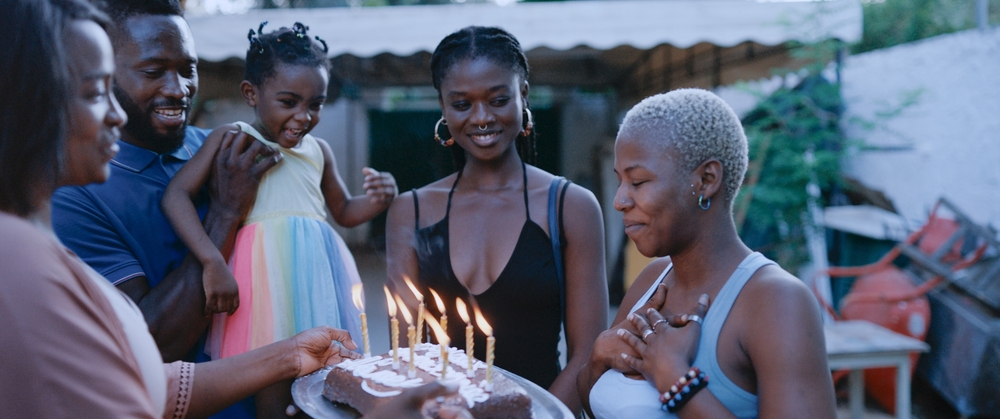
How would you define the aesthetic of Promised Sky, and how did the style you envisioned inform your choice of camera and lenses?
The look of the film was established very early on. Together with the director, we chose a cool palette, dominated by blues, which was conceived during the preparation stage and applied to the costumes, sets and lighting. This direction was then consolidated during color grading with Vincent Amor, in order to maintain chromatic consistency throughout the film.
Filming took place in the summer in Tunis, where the light is particularly harsh and contrasted. We worked with an Alexa Mini LF and Panaspeed lenses, whose quality allowed us to soften faces and smooth out highlights. I also chose these lenses for their close focus and T1.4 aperture, two essential criteria for me on a film where improvisation plays an important role. This aperture offers great freedom, especially with a sometimes limited lighting package, and allows for spontaneous shooting when necessary, while maintaining control over the image.
Finally, our camera setup favored close proximity to the characters. This approach was in keeping with the film, which follows the journey of three Ivorian women and a child in Tunis. 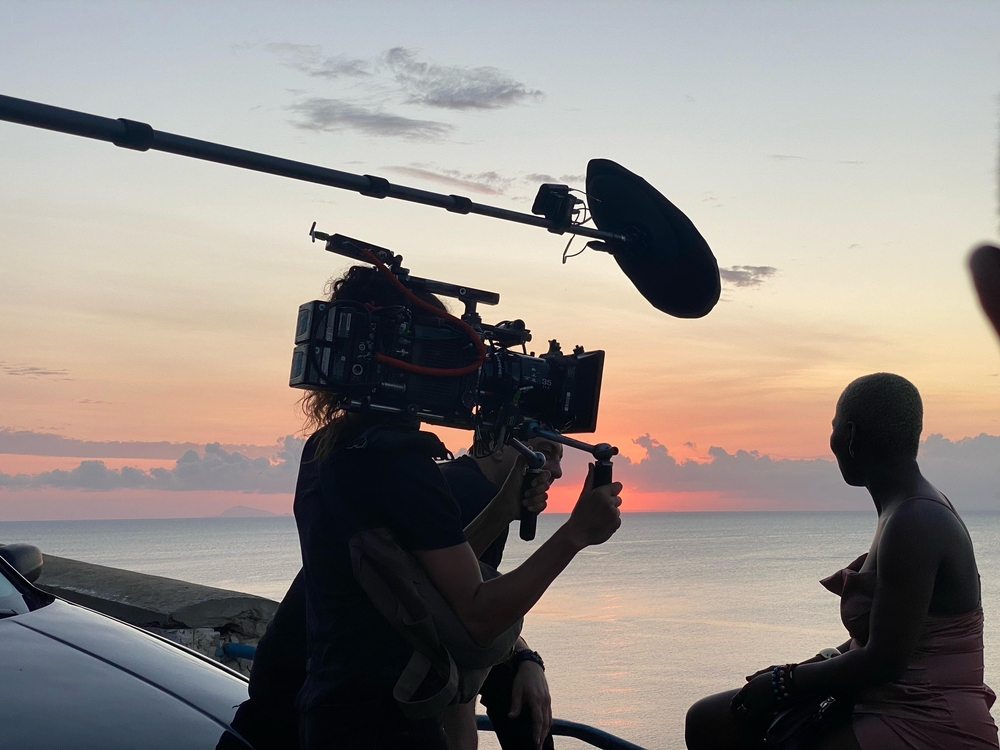
What made you want to become a director of photography, and what inspires you today?
What inspires me most is the chemistry that develops in certain collaborations, particularly between a director and a director of photography. When that chemistry exists, you can feel it immediately, and it transforms the work on set. What also inspires me, of course, is the subject of the film, even though I select my projects primarily for the people behind them.
The desire to become a cinematographer came to me on a set where I was a script supervisor intern. At one point, I saw the cameraman on a crane, high up, and it struck me. This desire was also fueled by very different films. Scorsese's films in particular, such as Casino, for example, for the beauty of the lighting. Or La Vie rêvée des anges [The Dreamlife of Angels] for its very strong naturalistic framing. Very different genres, but ones that have shaped my taste today.
Related Products and Services
This is a carousel with manually-rotating slides. Use Next and Previous buttons to navigate.
