Cinematographer Todd Martin: Creating With Intention
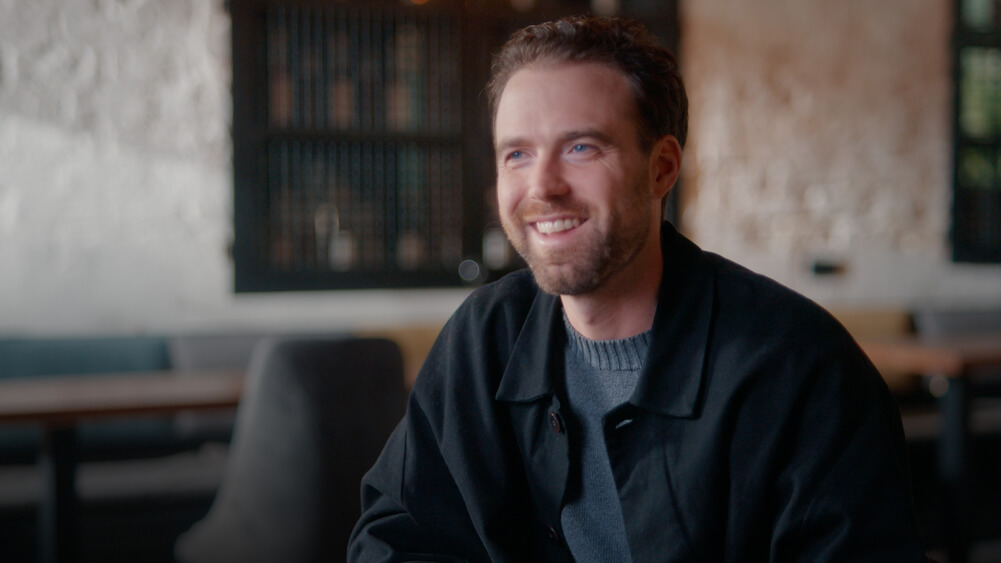
Cinematographer Todd Martin spent years shooting commercials, music videos and short films before stepping into narrative features with writer-director Lauren Hadaway's The Novice, which earned him the Best Cinematography prize at the 2021 Tribeca Film Festival. For his subsequent feature, the Guy Nattiv and Zar Amir Ebrahimi-directed drama Tatami, he worked with Panavision to find a custom optics solution that could convey his subject's mounting psychological pressure. In this video, Martin reflects on the leap from short-form to feature work, his approach to lighting spaces to allow for the dance between camera and actors, and how a lifelong passion for music continues to shape his creative process.
Feature Filmmaking
“It took me a while to decide to do my first feature,” Martin shares. “It wasn't until I had done a music video with a producer [Lauren Hadaway], and she had written the script about her own experience as a collegiate rower that was very Whiplash, Black Swan-style. And so I thought, ‘Okay, I can bring a lot of the techniques that maybe I bring to music videos, Steadicam-ing and then I'm popping on handheld or Easyrig.’ There's quite a pace to that.”
Martin notes that it can be difficult for a cinematographer to make the step into shooting features, even with a wealth of experience on short-form projects. “As a first-time feature DP,” he says, “the chances are not always taken on you because there's not much to prove from multimillion dollar ads. They don't want to see what you can do with $4 million in three days. They want to see what you can do with that in 25, 30 days plus.”
He also has his own criteria when deciding whether to take on a feature-length production. “When it comes to choosing features, you have to really give so much to it that I find it hard to just accept projects on the same standard that I would with a short form,” he says, adding that he’ll ask himself, “‘How do I feel about the way the director's interpreting this?’ and kind of going from there.”
A Dance Between Camera and Actor
Noting that he always operates the camera, Martin says that during preproduction, one of his priorities is “to think about how to light spaces and not necessarily box actors into very specific and restrictive frames. Having that freedom to be able to move around and react to the performances because there's something that's happening in front of you. You know that through all of the prep with the director, what the emotional through line of a certain scene or a certain section of the film will be.”
Creating that space is critical, he says, because “when you're actually on set in the space and the camera's rolling, there's a lot that the actor's unveiling that you need to react to. I find that it's a bit of a dance.”
Collaborating With Panavision
“Panavision has had my back for a long time,” Martin says, adding that “movies are where I was able to realize that.” In preparing for a feature and determining the lenses that he’ll use, he explains, “I'm seeking a look that feels very effortless in some way. You don't want it to bring awareness to itself. I'm not trying to have a look that makes the viewer aware of our hand. Maybe it's just the nostalgia that so many amazing films have been shot on Panavision glass — it just feels very natural when you're lensing something, and it doesn't take me out personally.
“For example,” he continues, “my last film, Tatami, I was looking for a specific look that would encapsulate the overwhelming pressure that the character was feeling. I’d had something happen on The Novice that I wanted to recreate in the lens. To have the ability to customize something and tailor a look to the film was something you're not really able to do with a lot of other lens makers.”
Passion for Creating
Between projects, Martin turns to music to both recharge and keep his creative muscles engaged. “I grew up playing the piano, and so I've always had this passion for music,” he says. “If I'm down for several weeks, I'll make music. So that's always been a good way to get into a flow state because it's something that's so individual, whereas filmmaking is so collaborative.”
When it comes time to decide which project to take on next, Martin shares that his thought process “really comes down to the people that you work with, friends or friends of friends, people that I know don't take it too seriously but are able to still inspire you because of how they've been following their dreams, and that's led them to this. There's this mutual passion for just creating.
“In the [feature] film side of things,” he continues, “I try to find films that move me specifically and that I feel I have a duty to tell. There's something there that I feel like I really can add to. I think I learned that over time, and having a bit more of a compass in that way I think is helpful, to work with people you love because they will inspire you and then find projects that also speak to something that motivates you.”