Cinematographer Paula Huidobro on craft & collaboration
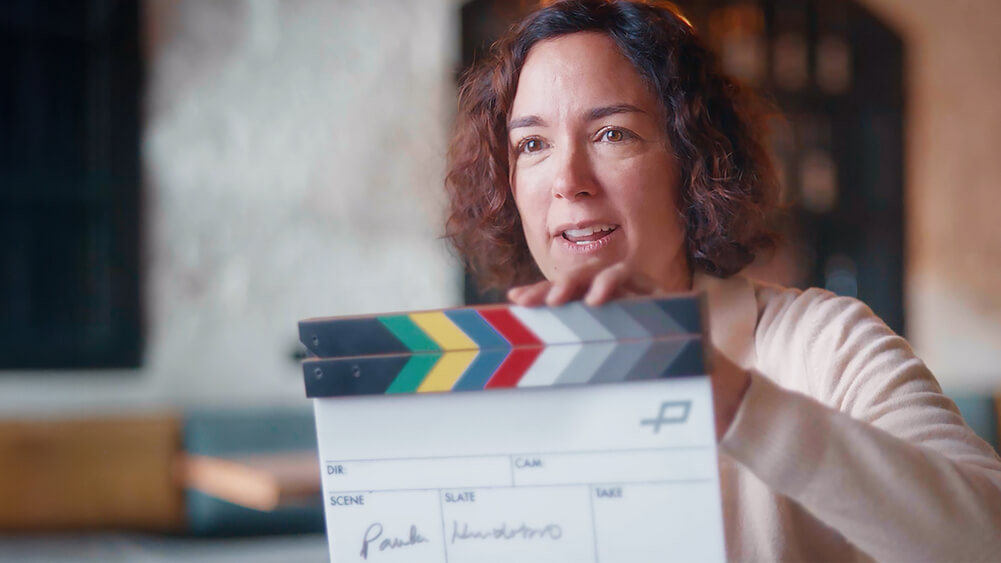
Hailing from Mexico, cinematographer Paula Huidobro studied her craft at the American Film Institute and further honed her skills working for renowned directors of photography such as Emmanuel “Chivo” Lubezki ASC AMC and Rodrigo Prieto ASC AMC. In this video, Huidobro discusses the formative experiences that shaped her approach to visual storytelling, emphasizing the importance of testing, experimentation, and genuine collaboration with directors and crew.
Learning the Craft
“I thought I wanted to be a director, but then I very soon realized that talking to actors was not my thing,” Huidobro reflects. Turning her focus to cinematography, she went to study at the American Film Institute, which opened the door for her to observe Lubezki at work. “When I was going at AFI, I interned for Chivo on a film called Lemony Snicket [A Series of Unfortunate Events]. It was a great Mexican connection.
“Emmanuel Lubezki was very generous with his time, and he let me ask him a million questions, and then he would let me operate on some of his commercials when I was still fresh out of film school,” Huidobro continues. “The same with Rodrigo Prieto, he also would let me operate. Even Chivo, he invited me once to watch him shooting a Terrence Malick film, and then he was like, ‘Oh, why don't you operate this take?’ And I was like, ‘Oh, sure.’”
Watching Lubezki work up close, Huidobro adds, “I was just in awe with the way he would light things. I think it's really beautiful work, and he also has a great demeanor and personality and attention to detail.”
Early Credits
Early on in her own work as a cinematographer, Huidobro lent her talents to acclaimed short films such as writer-director Sian Heder’s Mother, which was made through the AFI Directing Workshop for Women and went on to receive a number of accolades, including at the 2006 Cannes Film Festival. “Also the short film I did for AFI [Wednesday Afternoon] won a Student Academy Award,” she shares.
“I started working with Panavision on my thesis film at AFI,” the cinematographer notes. “I would go there and try to learn at the rental house as a film student. They were always very generous and definitely welcoming, and they are always patient and kind.
“I definitely love David Dodson [Panavision’s Senior Vice President of Client Relations and Business Development] and Dan Sasaki [Senior Vice President of Optical Engineering and Lens Strategy],” she continues. “It's really fun going there and showing them pictures of what you're looking for, and then they propose lenses and equipment.”
Ultimately, Huidobro says, the decision of which lenses and camera equipment to use on a project “has to start with a conversation with the director.” In the beginning,” she adds, the discussion tends to be “a little bit more abstract or inspired by other work you've seen. And then from there, you try to start landing it on a more concrete way. It's amazing when you get to test different things and experiment, and then you recognize what you're looking for.”
Guiding Lessons
Huidobro’s recent credits include the feature Lisa Frankenstein and series such as Little America, Physical, Pam & Tommy, Welcome to Chippendales and The Residence. Reflecting on the diverse genres her work spans, she shares, “I like to try to not do the same thing. I try to be inspired by what the director wants and what the project calls for — and also collaborating with a gaffer or a new operator, try to make things different than I've done before. You can connect and bring something of yourself.”
From her early days as a student and an intern, the cinematographer reflects, “I learned how far it takes you to be a good, kind, respectful person to the whole crew. And as you mature, you'll start collaborating more with other people, and they're happy to have you with them.”